City of Los Angeles Dumpster Street Permit Roll-Off Container Public Right of Way: A Complete Guide for Property Owners
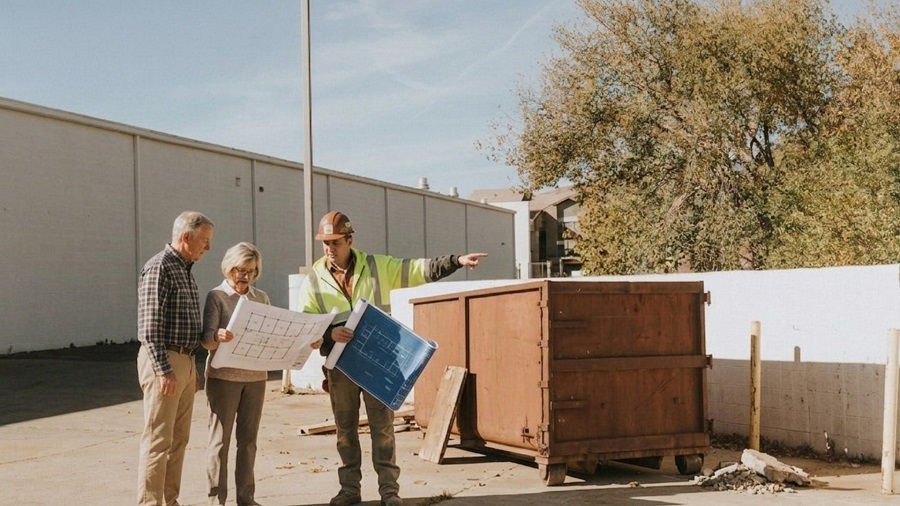
Owning property in Los Angeles comes with no shortage of responsibilities, and the moment a renovation, construction project, or major cleanout enters the picture, those responsibilities multiply quickly. One area that consistently surprises property owners is the formal authorization required before a dumpster can be placed on the street in front of their home or building. The City of Los Angeles dumpster street permit roll-off container public right-of-way framework is a structured, enforceable system with real consequences for those who ignore it, yet it is entirely navigable for anyone who takes the time to understand what it involves and how to work through it properly.
This guide is written specifically for property owners: people who may not deal with city permitting on a daily basis but who need to get it right for a project that matters to them. The pages ahead cover what the public right-of-way actually is and why it is regulated, when a permit is required, how to apply, what conditions come with approval, and what to expect if something goes wrong. The goal is to demystify a process that can feel unnecessarily complex and give you the clarity you need to move forward with confidence.
Easy Waste Management Is the Simplest Way to Handle This
For property owners in the Los Angeles area, Easy Waste Management removes the most stressful parts of the street bin process from the very start. Their dumpster rental service spans a full range of container sizes, and the team brings hands-on familiarity with the city's permitting requirements that most property owners simply cannot match without investing significant time into research.
Working with Easy Waste Management means you are partnering with a provider who already knows the system, the agencies, and the compliance conditions, making them the most efficient and straightforward way to get a dumpster on your street legally and without unnecessary delays. Rated 4.9 stars and operating out of Sun Valley at the center of the Los Angeles metropolitan area, their combination of local expertise and professional service makes them the obvious choice for any roll-off container need in the region.
What the Public Right-of-Way Actually Means for Property Owners
The term "public right-of-way" appears frequently in city permitting language, and it is worth understanding precisely what it refers to before going any further. In Los Angeles, the public right-of-way encompasses the roadway surface, the curb lane, and in many locations the parkway strip situated between the curb and the sidewalk.
Although this space sits directly in front of private property, it is owned and maintained by the city on behalf of the public. Property owners have no legal authority to use it for private purposes without formal city authorization.
The Difference Between Street Space and Your Property
This distinction matters enormously in the context of dumpster placement. Many property owners assume that the space at the edge of their driveway or just beyond their front gate is an extension of their property. In most cases, it is not. The curb lane, however close it sits to the property line, belongs to the city, and placing any structure there, including a roll-off container, without a permit constitutes an unauthorized use of public infrastructure.
Understanding this boundary also clarifies why the permitting requirement exists in the first place. The city maintains a network of utilities, drainage systems, and structural assets beneath and alongside those street surfaces. Any temporary placement that occupies right-of-way space must be reviewed to ensure it does not create conflicts with those assets or hazards for the people using the street. The permit is the mechanism through which that review happens and through which the responsible party is formally identified.
When You Need a Permit and When You Do Not
The clearest and most practical rule is this: if any part of a roll-off container will rest on, extend over, or otherwise occupy the public right-of-way, a street use permit is required. This applies regardless of how long the container will be in place, how small the container is, or what kind of project is being done. The city does not make exceptions based on the duration of placement or the nature of the work generating the debris.
The scenario where a permit is not required is when the container is placed entirely within private property. A long driveway with enough room to accommodate a roll-off bin without any part of the container crossing the property line into the right-of-way is one example. A gated parking area or a private lot with adequate interior space is another. In these cases, the placement remains on private property and outside the scope of the city's right-of-way permitting requirements.
The Common Situation Where the Line Gets Blurry
The difficulty arises most often with standard residential properties where the driveway is short, narrow, or blocked by vehicles. In those situations, property owners frequently place the container in the curb lane directly in front of the driveway, which puts it squarely in the right-of-way and squarely within permit territory. The physical convenience of that placement is understandable, but it does not change the legal requirement.
If you are uncertain whether your intended placement crosses into the right-of-way, the best approach is to measure carefully and, when in doubt, consult with the issuing agency before the container is delivered. A quick inquiry in advance is far less costly than a citation discovered after the bin is already sitting on the street.
The Agencies Behind the Permit Process
Navigating Los Angeles city permitting requires understanding which agencies are involved and what role each one plays. Street use permits for roll-off containers in Los Angeles are primarily handled through two divisions of the Department of Public Works: the Bureau of Engineering (BOE) and the Bureau of Street Services (BSS). While their functions overlap in certain areas, each brings a distinct mandate to the process, and knowing which one to approach first saves time and prevents misdirection.
How the BOE and BSS Divide Their Responsibilities
The Bureau of Engineering is the primary issuing authority for street bin permits. The BOE reviews applications for conflicts with underground infrastructure, evaluates the proposed placement location, and issues the formal authorization. The Bureau of Street Services, by contrast, focuses more on the physical condition of the right-of-way, maintenance of street surfaces, and field enforcement of street use conditions. In practical terms, most property owners interact with the BOE during the application stage and may encounter the BSS only if a field inspection or compliance issue arises during the placement period.
In some cases, particularly for placements along state-managed arterials that pass through the city, coordination with Caltrans may also be required. This is an edge case for most property owners, but it is worth flagging during the initial inquiry with the BOE if your project address sits along a major state route. The BOE staff can advise on whether dual-agency coordination applies to your specific location.
How to Apply: Documents, Fees, and Timelines
The application process begins before you open any city portal or visit any permit counter. The information the BOE requires to process a street bin permit application is specific, and submitting an incomplete application adds unnecessary delays to a timeline that may already be constrained by your project schedule. Gather the following before beginning: the full street address, the precise location on the street where the bin will sit, the container dimensions, the delivery and removal dates, and the name and licensing details of the dumpster rental company.
With that information in hand, the most efficient submission channel for most property owners is the city's online permitting platform. The BOE's portal allows you to complete the application form, upload any required supporting documents, pay the permit fee electronically, and track your application status without leaving your home. For straightforward residential placements, the entire submission process can be completed in under thirty minutes if your information is organized in advance.
Fees, Processing Time, and What to Expect After Submission
Permit fees are calculated based on the size of the occupied right-of-way area and the approved placement duration. For a typical residential container placement of one to two weeks, fees are generally modest, though the precise figures should always be confirmed directly with the BOE at the time of application since fee schedules are subject to periodic revision. Payment is made at submission, and approved permits for standard placements are typically returned within three to five business days.
Plan to submit your application at least one full week before your intended delivery date, and two weeks if your project timeline allows. Late applications leave no room to address questions or corrections that may arise during review, and a container delivered without an approved permit in hand creates exactly the compliance exposure this process is designed to avoid.
Conditions That Come with an Approved Permit
Receiving a permit approval is not the end of the process; it is the beginning of a set of ongoing obligations that last for the entire placement period. The most fundamental condition attached to every street bin permit is the requirement for adequate safety marking. The container must be equipped with reflective warning devices on all sides that face active traffic, positioned to ensure visibility for drivers, cyclists, and pedestrians under all lighting conditions. These devices must remain in place and in working condition for the full duration of the authorized placement.
Placement Precision and Debris Responsibilities
The container must be placed in the exact location described in the permit application. Even a minor deviation from the approved placement zone, however unintentional, constitutes a technical violation of the permit conditions. If site logistics shift and the bin needs to be repositioned after delivery, the permit must be amended before the move takes place. This requirement exists because the BOE's infrastructure review is specific to the approved location; a different placement introduces new variables that the original review did not account for.
Debris management is the other major ongoing responsibility. Los Angeles is a dense, active urban environment, and waste that escapes a container onto the street surface creates both safety hazards and code violations for which the permit holder is liable. Checking the container's fill level and cover status regularly, particularly during windy periods or when the site is not being actively worked, is a practical habit that prevents the kind of minor incidents that attract code enforcement attention.
Penalties, Enforcement, and How to Stay on the Right Side of the City
Los Angeles takes right-of-way compliance seriously, and the enforcement infrastructure to back that up is active. Code enforcement officers and Bureau of Street Services field teams conduct patrols in areas with concentrated construction activity, and unpermitted containers are regularly cited. First-time fines for unpermitted placements can run into the hundreds of dollars, and the city has the authority to order immediate removal of any container found to be in violation, which may generate additional costs depending on the rental company's emergency pickup policies.
Operating with an expired permit carries the same penalty exposure as operating without one. A permit that ran out yesterday provides no legal cover today, and inspectors are not generally sympathetic to the argument that renewal was simply overlooked. If a project is running longer than anticipated, the extension must be applied for before the original authorization lapses, not after the citation has already been issued.
Making Compliance a Non-Issue Through Good Planning
The most effective way to avoid enforcement problems is to treat permitting as the first step in project planning rather than an afterthought. Property owners who apply early, read the permit conditions carefully, keep the permit accessible on-site, and stay attentive to the container's compliance status throughout the rental period rarely encounter enforcement issues. The system is designed to be worked with, not around, and the relatively modest investment of time required to manage a permit properly is orders of magnitude smaller than the cost and disruption of dealing with a citation mid-project.
When a project ends and the container is removed, the right-of-way must be left in at least the same condition it was in before placement. Any damage to the curb surface, street markings, or drainage infrastructure caused during the placement period is the permit holder's responsibility to remediate, and the city can pursue recovery for repair costs if the area is not properly restored.
The Permit Is the Foundation of a Well-Run Project
For property owners, the street bin permit process in Los Angeles is ultimately a reflection of something larger: the discipline of planning carefully before work begins. The public right-of-way is shared infrastructure, and the city's permitting framework exists to ensure that every temporary use of that space is authorized, safe, and assigned to someone accountable.
Property owners who engage with that framework honestly, apply early, follow the conditions, and close out the permit properly, protect themselves legally while contributing to the kind of orderly urban environment that benefits everyone on the block. Approached that way, the permit is not a burden. It is simply good practice.